
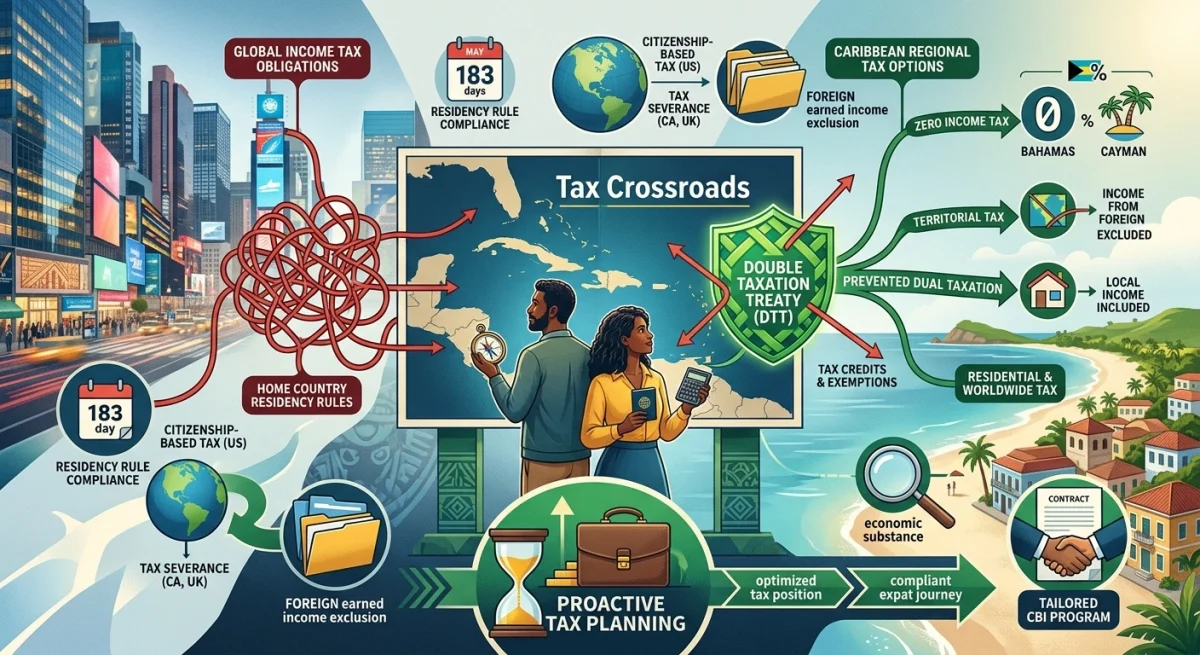
For most people contemplating a move to the Caribbean, the tax conversation begins and ends with a seductive cliché: zero personal income tax under a tropical sun. It is a fantastic marketing pitch, but as any seasoned financial analyst will tell you, global tax authorities are rarely in the business of letting high-net-worth individuals walk away cleanly.
The reality on the ground is a patchwork of wildly different fiscal models. Yes, tax havens like the Bahamas, Bermuda, and the Cayman Islands do not levy a personal income tax. But governments still have to fund their budgets. What you don’t pay on your paycheck, you often pay at the port, at the registry, or at the grocery store through steep import duties, stamp taxes, and local consumption fees that quietly drive up the cost of everyday life.
Move into nations with territorial tax systems, and the math changes again. Regions that only tax locally sourced revenue can be a haven for remote workers or investors pulling dividends from abroad. But cross the physical presence threshold of 183 days in a country with a traditional worldwide tax model, and you suddenly find your global portfolio under local scrutiny.
The real catch, however, isn’t just where you land—it’s where you came from.
American expats learn this lesson the hard way. The IRS follows its citizens everywhere, regardless of where they sleep or earn a living. While mechanisms like the Foreign Earned Income Exclusion offer some relief, moving to an island with no income tax doesn’t mean you stop filing US tax returns. European and Canadian expats face a different hurdle: establishing a clean, legally defensible severance of tax residency from their home countries before claiming a new island domicile.
Worse still, unlike major Western economies, many small Caribbean island states lack extensive networks of bilateral Double Taxation Treaties. Without a treaty in place, you risk getting squeezed from both sides if your tax strategy isn’t watertight from day one.
Promotional schemes like digital nomad visas and Citizenship by Investment programs have made moving physically easier than ever. But holding a shiny new residency permit or a second passport is not a magic wand that erases your tax domicile. Until you build real economic substance, track your days meticulously, and align your home country’s exit rules with your host country’s intake laws, the tax labyrinth follows you right to the beach.