If you ask a Dominican how they like their beer, many will say: “cold, very cold.” But when they say “cold,” they actually mean frozen—almost “dressed as a bride,” as the popular expression goes. That obsession with ice-cold beer is not random. There is a story behind it, and it is not the story of beer, but of ice.
The Taíno People, Ice and the Refrigerator
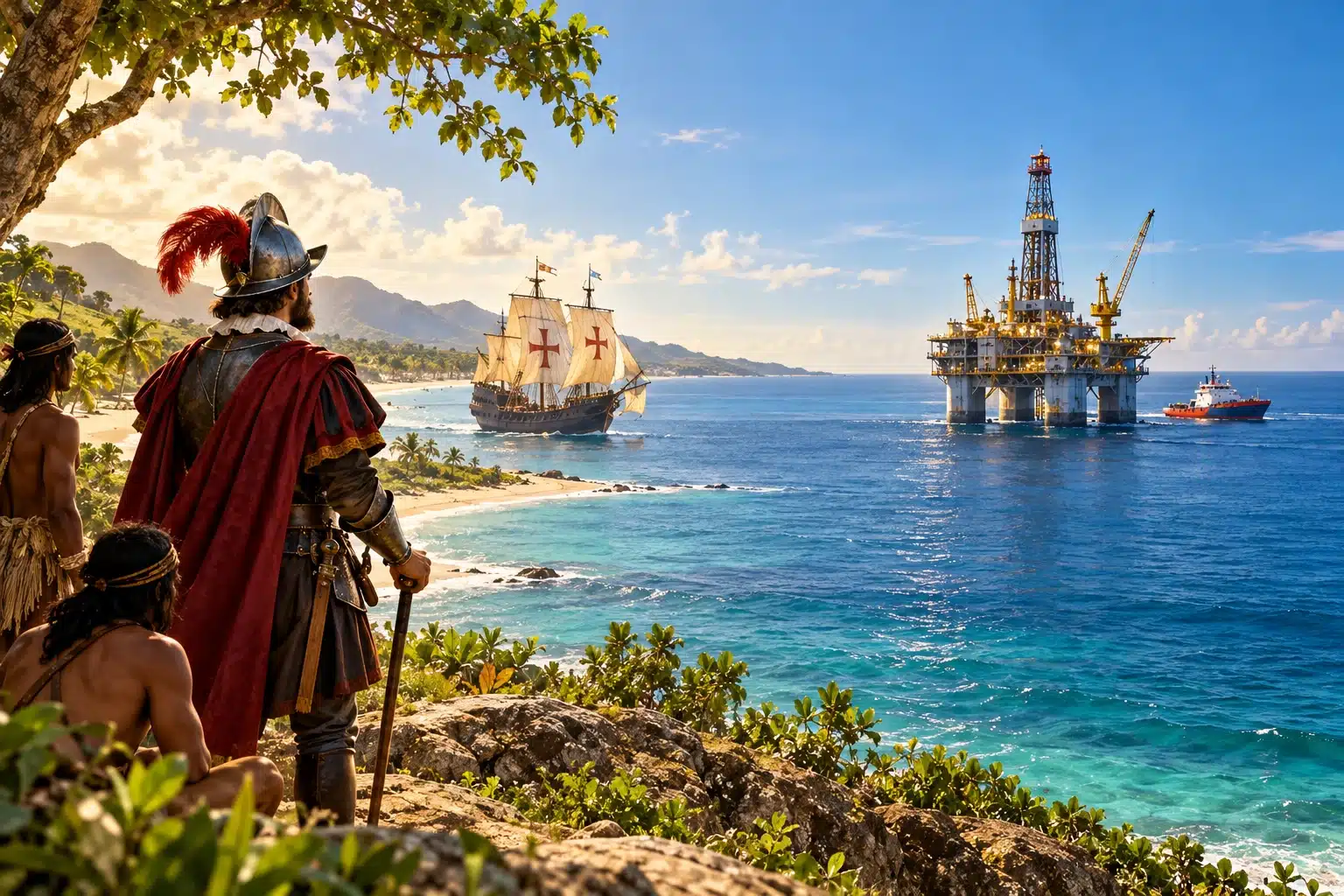
On the island of Hispaniola, ice was not common. Although high elevations could freeze water on very cold nights, ice was not part of everyday life. In other parts of the world, things were different. In Mesopotamia, there is evidence of structures for storing snow covered with straw. In Greece and Rome, only the wealthy had access to ice, which they stored in chambers called nivaria—the origin of the word nevera, or refrigerator.
In northern Europe, people cut blocks of ice from frozen rivers and stored them in underground vaults for use during the summer. It was natural refrigeration, without electricity. But in the Caribbean, all of that was unthinkable—until a man named Frederick Tudor, the “king of ice,” appeared.
Frederick Tudor and Ice for the Caribbean
Tudor, who was born in Boston, decided he could cut ice from New England’s lakes, ship it by boat and sell it in the Caribbean. Everyone thought it was madness. The first time, he lost everything: the ice melted halfway through the journey. He ended up in prison for debt, but he did not give up. He began giving ice to bartenders and cafés so people could try cold drinks. In his diary, he wrote that anyone who tried cold drinks would never again accept them lukewarm. He was right. By the 1830s, his ice business was an empire reaching as far as India.
But there was a problem: trade with Haiti was practically prohibited by the United States. Tudor’s ships did not reach the eastern part of the island. As a result, Dominicans were practically excluded from ice just as other Caribbean cities were beginning to enjoy it.
The Arrival of Ice in Santo Domingo
When the Dominican Republic gained independence in 1844, everything changed. The city began opening itself to international trade. During the 19th century, German, English, American and Cuban merchants arrived. They brought their customs, including cold drinks. Santo Domingo had an architectural advantage: the thick stone walls of the Colonial City kept interiors cool, especially in basements. Food and beverages were stored there. British dark beer and later German beer were already being served cold, but not frozen.
The first attempt to bring in commercial ice came in 1863. A Venezuelan, Pablo Paz de Castillo, requested official permission to bring snow into Santo Domingo. The fact that the government had to authorize it shows how unusual ice was. The real turning point came in 1879.
1879: The Ice Factory and the First Industrial Beer
In 1879, El Eco de la Opinión published an enthusiastic advertisement: “Ice, ice, ice. At Donado Salbucio’s establishment, ice is available at all hours.” That same year, Delfonso Méndez Brea, son of Matías Ramón Méndez, received a concession to install the first artificial ice factory in Puerto Plata, with 10 years of exclusivity. The machine used ammonia evaporated through pipes submerged in water to extract heat and form ice. It was noisy, smelly, coal-consuming and expensive. But it worked.
In Puerto Plata, ice became part of modern life: cold drinks in the tropical heat, food preservation and the status of a city that felt connected to the world. But the revolution reached Santo Domingo when someone made a key decision: combine the ice factory with the beer factory.
Lager, Pilsner and the “Ideal Beer”
Beer is not the same everywhere. The first beers to arrive on the island were dark and strong, in the style of English porter. Later, German beers—light and bitter—became dominant. American beers were seen as watery and weak. None of them fit particularly well with the extreme climate.
In Bavaria, brewers discovered that fermenting at low temperatures—between 2 and 10 °C—produced a cleaner, clearer and more refreshing beer. They called this style lager, from the German lagern, meaning “to store,” because it had to be kept cold for weeks. Within the lager family, the most famous variety is Pilsner: golden, transparent, slightly bitter, light and highly refreshing. Pilsner beer originated in 1842 in the city of Plzeň, or Pilsen, in the Bohemian region of what is now the Czech Republic. It was created by Bavarian German brewmaster Josef Groll, who introduced a paler, brighter lager style with a distinctive use of hops, setting it apart from the dark and cloudy beers of the period. It was an immediate success and changed the global brewing paradigm, giving rise to the name Pilsner, or Pilsen, meaning “from Pilsen.” Today, it is the world’s most popular beer category.
The Beer Factory and the Alliance with Ice
In 1897, The New Jersey and San Domingo Brewing Company opened in Santo Domingo, popularly known as the “Great National Beer Factory.” It was a project backed by American capitalists of German origin who wanted to produce a local Pilsner-style lager. The key was that Pilsner needs constant cold to ferment and remain fresh.
The factory had something no one else had: an enormous ice-production capacity. It began negotiating with restaurants, bars and hotels: “We’ll give you ice 24 hours a day, as much as you need. In exchange, you sell our beer.” It was Tudor’s same strategy, but with industrial amplification. The beer arrived cold, almost frozen, and people grew accustomed to that standard.
Cold Beer Becomes Law
Advertisements of the time proclaimed: “Hotel Restaurante Ambos Mundos: national beer alongside ice at all hours.” Others said the beer was “as cold as if it were at the North Pole.” The competition was no longer about the best food, but about the coldest beer. Cold Dominican Pilsner immediately became the queen of the streets. Cold stopped being a detail; it became the standard of quality.
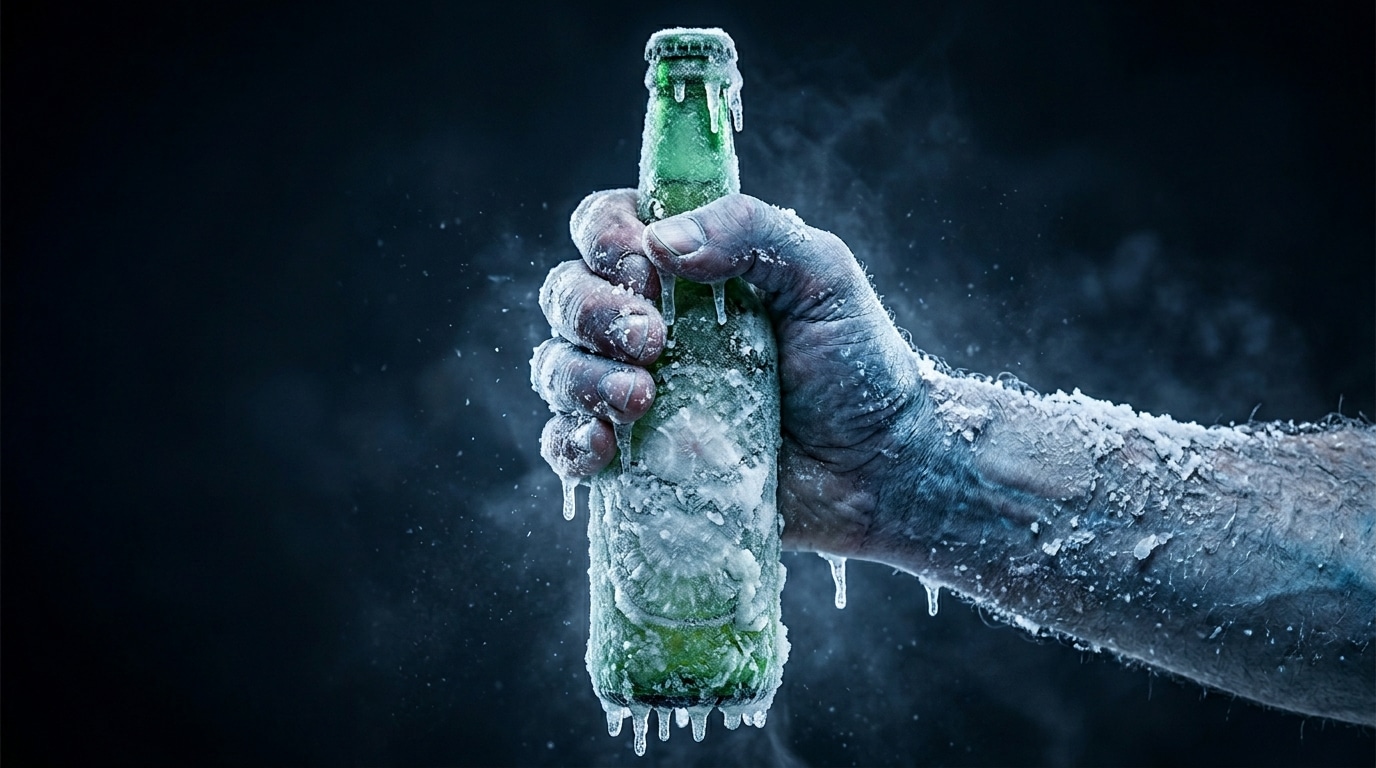
When a beer bottle approaches freezing, tropical humidity collides with it and freezes, forming frost, like a wedding dress. That is how the expression “beer dressed as a bride” was born. The same beer may be mediocre when lukewarm, but frozen, it is almost sublime. Cold does not merely chill it; it transforms it.
Ice Changes the City
The fascination with ice did not remain limited to beer. In 1911, Tomás Otáez founded the first ice factory in the Cibao. In 1926, he built the first power plant in that city. Ice arrived before electricity. That shows how central ice was to the era’s vision of modernity. Gas refrigerators came later—appliances that many people remember from their grandparents’ homes. Ice became democratized.
Today, the Dominican Republic produces more than 1 million pounds of ice per day. The culture of frío frío—very cold—spread to passion-fruit juice, rum and other drinks, but cold beer remained its most visible symbol.
The Germans, Beer and Temperature
A common myth is that Germans like their beer warm. That is not true. In Germany, beer is stored in cool basements at 10–12 °C. It is not warm; it is cool. At that temperature, German beer is drunk to appreciate its aroma and flavor. The difference is that Dominicans drink it too cold.
For the business, very cold beer is ideal: it is consumed quickly, and another is ordered before people think too much. That is how light beers emerged, with less flavor, less alcohol and more cold. Cold stopped being a detail; it became a requirement. In many cases, beer without frost is barely noticed.
Why Is It Served So Cold?
The answer has three levels. First, the island never had ice, and then received it intensively. Second, the dominant beer—a Pilsner—genuinely tastes better cold. Third, the economy pushed the habit: colder means more consumption. The result is a culture in which beer must be frozen, “dressed as a bride”.
Few countries go so far. Brazil has a similar culture, shaped by its own history of ice and beer. But elsewhere, people do not feel compelled to freeze their beer: extreme cold numbs the flavor, kills the foam and diminishes the drinking experience. Mastering beer is not only about drinking it, but also serving it in a glass at the right temperature, with foam, and enjoying the flavor—not just the cold. Good beer deserves warmth, while always recognizing that, in the Caribbean, cold beer became history, custom and pride.