By Alec Corday
In the mid-20th century, the Dominican Republic experienced a peculiar battle—not over territory, but over bottles. For years, the local market depended on imports, especially German beers, which shaped Dominican tastes with fuller, more bitter flavors. Several attempts to produce a national beer failed until, in 1929, Charles H. Wans and his team founded the Cervecería Nacional Dominicana (CND). After several trials—including Colón and Reina—Presidente beer ultimately established itself by combining European techniques with adjustments designed for the local climate and tastes.
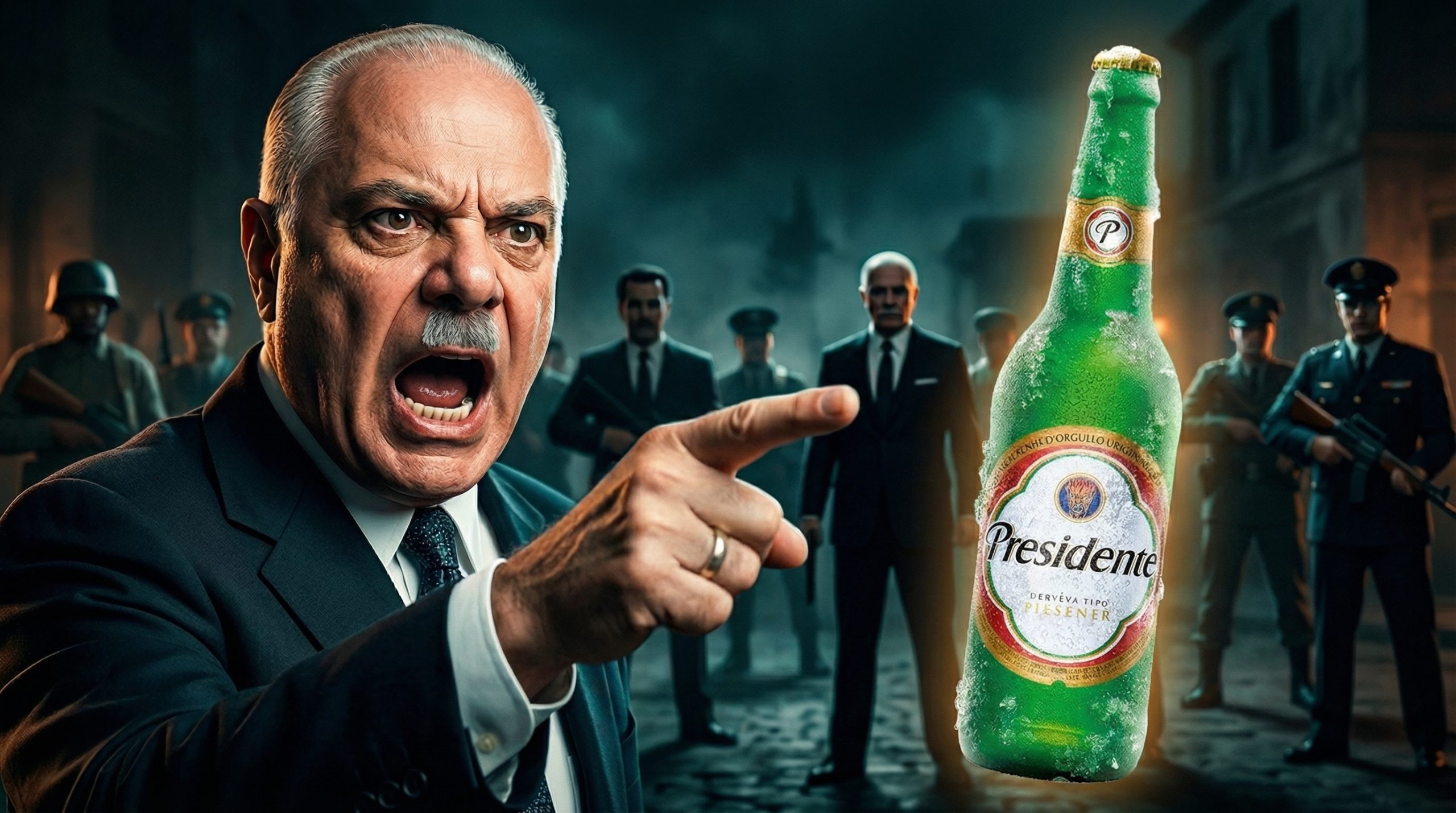
The story took a turn when Rafael Trujillo, seeking to expand his economic and symbolic control, attempted to take control of the brewing industry. Unable to gain an easy foothold in CND, he promoted the creation of the Sociedad Cervecera Antillana (SCA) in 1947, backed by his family and run by technicians recruited from CND, including Jaime Gronau. The SCA launched La Dominicana with an omnipresent campaign: mass advertising, commercial incentives, and the regime’s explicit promotion. The message was clear: drinking the “national” beer was part of loyalty to those in power.
But control did not become preference. Although La Dominicana appeared in shop windows and bars through implicit coercion, people—customers and merchants alike—developed a silent complicity: display the official beer when necessary, but continue ordering Presidente in secret. That practice became a discreet form of everyday resistance to a system that sought to regulate even consumption. Pressure from the regime was not enough to change popular taste.
Eventually, the commercial strategy took a pragmatic turn: Cervecería Nacional ultimately bought SCA, absorbing its production capacity and leaving Trujillo with a stake in the industry. The result was twofold: Presidente solidified its leadership among consumers, while the regime managed to influence the business from within. Few traces of that “war” remain: most of the brands involved disappeared, except for Malta Morena, which endured as a silent reminder.
The lesson of this story is twofold. On the one hand, power can control a product’s distribution and visibility; on the other, it cannot always impose popular taste. Yet taste is not immutable: over the decades, the Dominican palate shifted toward lighter beers, in line with mass-market trends. Today, two worlds coexist: light commercial beers and a wave of more robust craft and European beers that revive older preferences. That coexistence shows that taste changes, sometimes returns, and at other times reinvents itself—but it rarely submits to decree.