The classic promise of island living rarely factors in the reality of Tuesday morning at the terminal. We are sold a fantasy of pristine solitude—soft sand, empty horizon, quiet coffee on the balcony—only to find ourselves marooned in a crowd. The modern travel industry has become exceptionally good at moving massive volumes of humanity, but far less adept at preserving the reasons those people wanted to leave home in the first place.
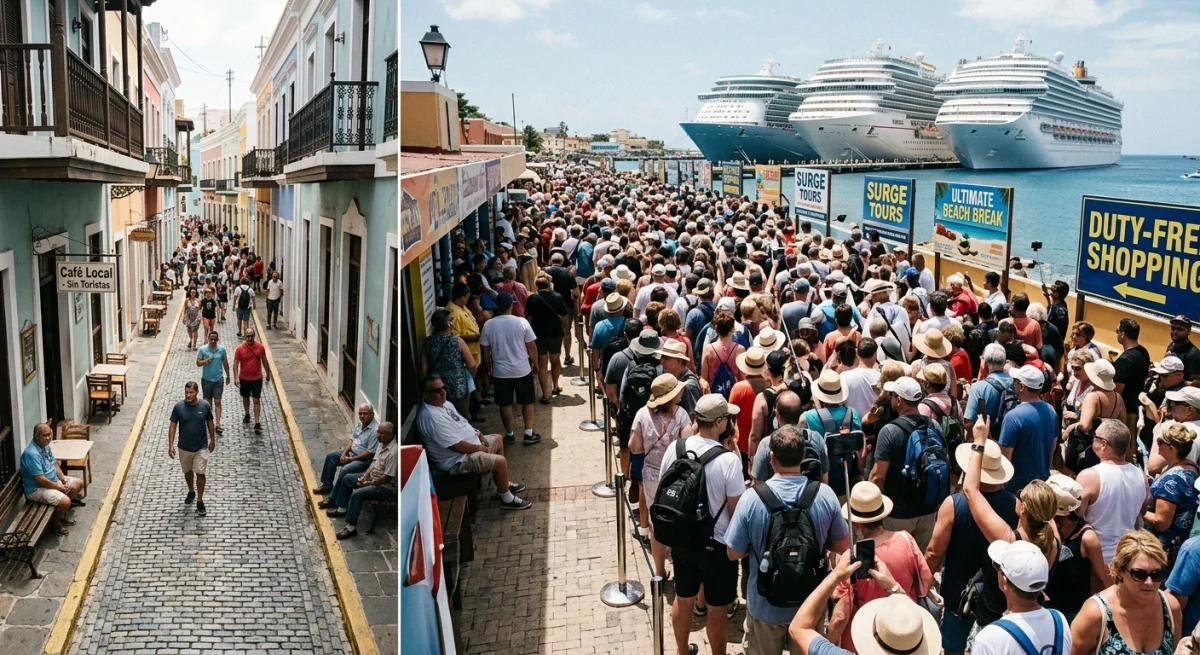
In popular Caribbean hubs, the pressure of mass arrival is hard to ignore. When three cruise liners empty simultaneously into a small port town, local life pauses. Waterfront plazas become obstacle courses of selfie sticks and tour operators, and the quiet rhythm of island culture is replaced by a high-decibel tourist economy built for turnover, not depth. It is difficult to feel any real sense of connection when you are simply participating in a crowd-control exercise.
Then comes the economic distortion. In heavily trafficked zones, the cost of everyday living climbs to match tourist budgets, driving up prices for simple meals, basic services, and real estate. Traditional family businesses slowly give way to generic gift shops and international chains, creating sanitized enclaves that feel less like living communities and more like sunlit theme parks. For anyone moving abroad to escape the friction and expense of home, paying a premium to live inside a permanent vacation bubble feels like a poor trade.
The frustration isn’t just about crowded beaches; it’s about the erasure of context. True culture doesn’t thrive in the middle of a surge zone. It exists in the quiet interior towns, the neighborhood markets that don’t print menus in three languages, and the coastal villages where life moves at its own pace regardless of the cruise schedule.
The real strategy for a successful relocation isn’t about chasing the famous postcards. It’s about looking past the obvious choices toward the secondary markets and lesser-known regions that offer genuine infrastructure, reasonable costs, and space to breathe. The most rewarding destinations are almost never the ones making the loudest noise.