
Poets say—those incurable romantics who are sometimes right by pure accident—that Puerto Rico and the Dominican Republic are the two wings of a bird. It sounds idyllic, almost like a tourism postcard funded by some ministry. But if we set aside the corporate cynicism of Caribbean marketing and scratch a little at the surface lacquer, you realize the metaphor is not a geopolitical exaggeration. It is a visceral reality. We share the same relentless sun, the same tropical storms that sweep across maps with equal indifference, and a way of understanding existence that defies any manual of continental logic.
To understand this invisible bridge, we have to step down from the academic pedestal. We do not need a sociology treatise to notice that the distance between Santo Domingo and San Juan is measured not in nautical miles, but in the speed at which coffee is served or the cadence of a greeting on the street. We are two islands separated by the Mona Passage—a treacherous strait that has witnessed too many tears and too many promises—but joined by an umbilical cord that neither politics nor passports have ever been able to cut.
The Silent Root: The Taíno People and the DNA of the Land
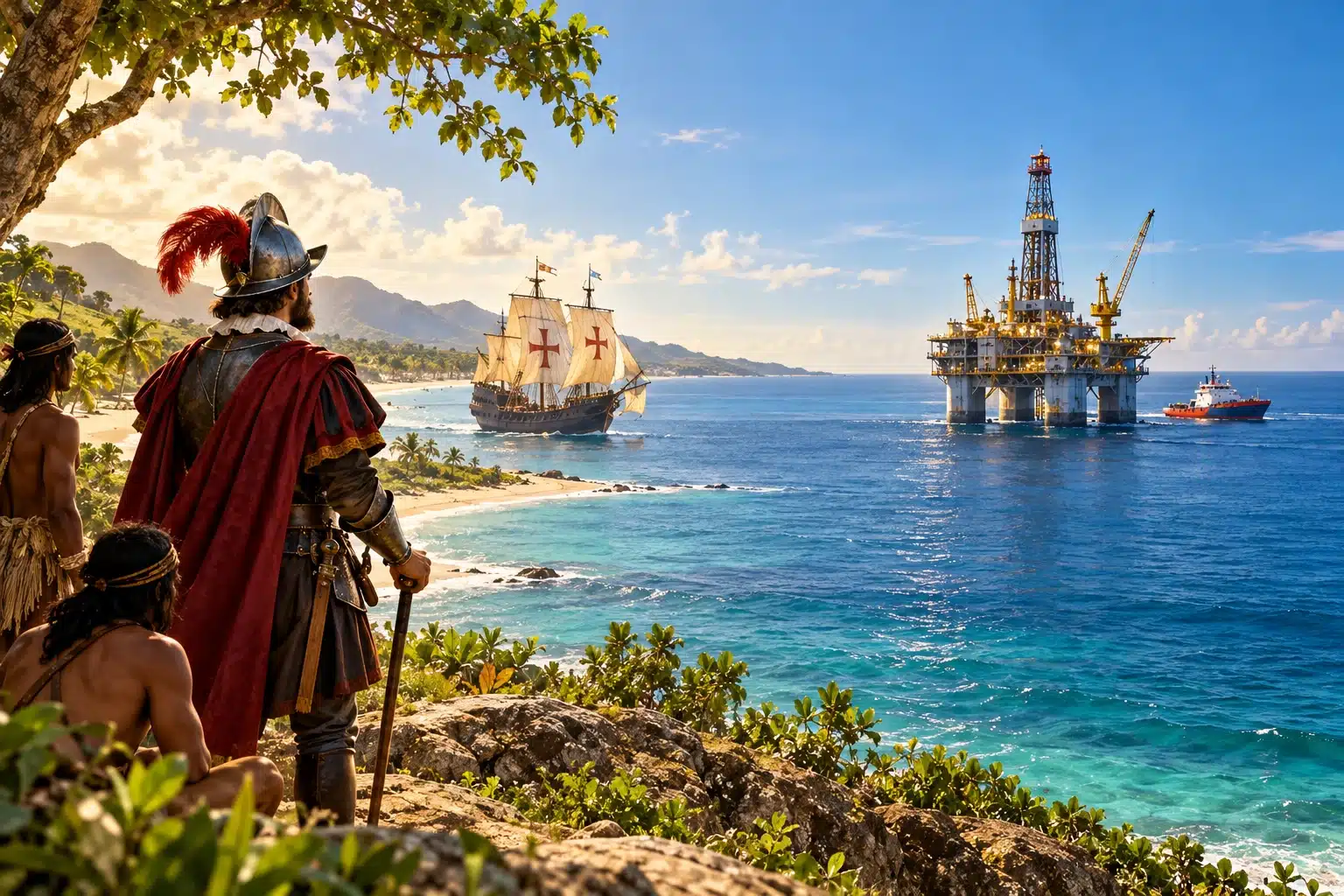
Before maps had colonial borders and flags divided the water, these lands were already beating to the same rhythm. Our oldest bond is not written in constitutional documents, but buried in the clay and floating through the place-names of our mountains. We share the sacred ground of Taíno culture. Quisqueya and Boriquén were sisters of the same spiritual archipelago.
That common ancestry, which official history sometimes tries to dismiss as an extinct chapter, survives in the DNA of our daily lives. It is alive every time we light a fire to make cassava bread, every time we look to the sky fearing the fury of Juracán, or when we name fauna and flora with the same words that echoed centuries ago in the areytos. We are not mere accidents of European colonization; we are heirs to an Indigenous sensibility that understood the Caribbean as one continuous whole. The pride of knowing ourselves to be children of the cacicazgo, of carrying in our skin the resistance of Hatuey and Agüeybaná, is the invisible foundation that keeps us standing in the face of every modern storm.

The Soundtrack of Survival: A Single Music
And if the Taíno people gave us the root and the first breath, music took charge of building the entire structure. Trying to separate the sounds of these two islands is a futile exercise, a cultural amputation. We were and remain the continent’s rhythmic laboratory. While in Quisqueya bachata moved from the marginality of backyards to global stardom, in Puerto Rican basements reggaetón mutated into the new transnational pop. We have nourished one another in an endless creative loop.
But beyond royalties and Billboard charts, there is an indomitable rhythmic complicity that borders on the spiritual. Dominican merengue, with its devilish speed and mischievous spirit, became a national treasure on Puerto Rico’s dance floors thanks to orchestras that crossed the waters to establish dynasties. In turn, New York and Puerto Rican salsa, with Fania’s rugged sophistication, found in Santo Domingo its most faithful temple and its most devoted fans. A Dominican understands the heartbreak and streetwise spirit of a bolero by Cheo Feliciano or a salsa song by Héctor Lavoe as if it were their own; a Puerto Rican dances to a merengue by Johnny Ventura or melts into a bachata by Juan Luis Guerra with a genetic naturalness that is almost unsettling. We carry the same metronome in our veins, a syncopated pulse reminding us that, whatever happens, as long as a drum or güira is sounding, tomorrow we will keep dancing.
The Migrant’s Melancholy: A Round-Trip Ticket
This is where cynicism comes undone and mature nostalgia enters—the kind that hurts a little in the chest. The contemporary history of our islands is marked by exodus. For decades, the Mona Passage was not a commercial route, but an abyss of hope and danger for thousands of Dominicans seeking an opportunity, an economic truce, on Puerto Rican soil. San Juan filled with working hands from the Cibao and the capital, men and women who built homes, seasoned street corners, and founded families in Santurce or Río Piedras.
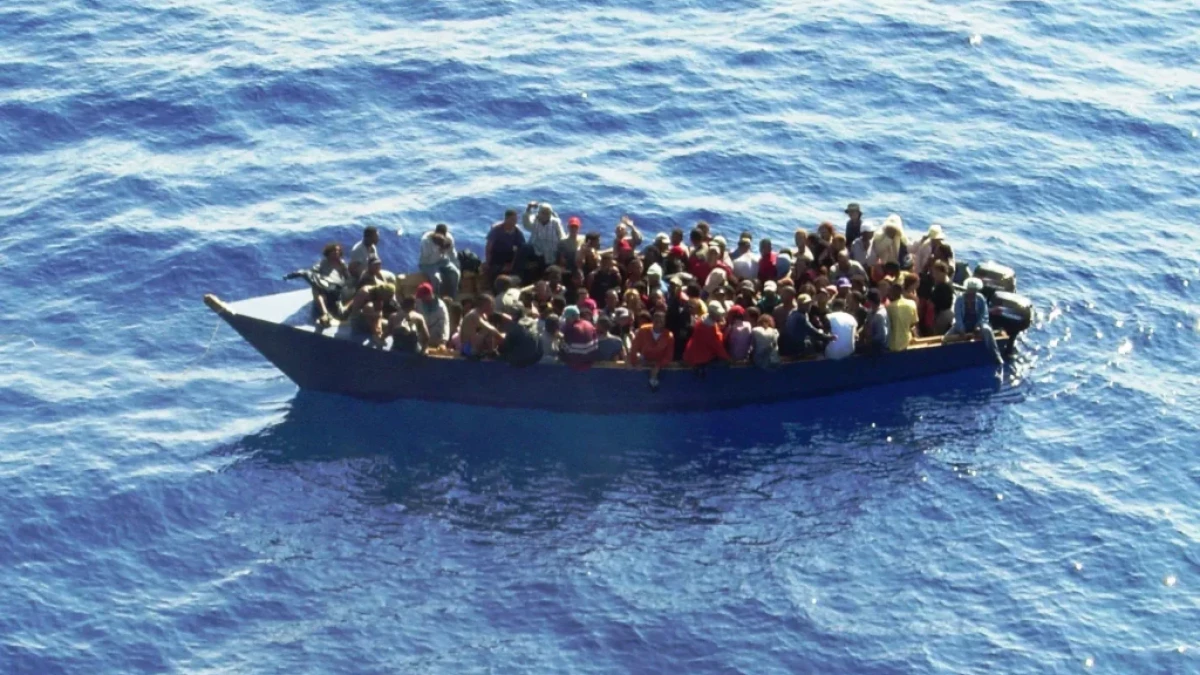
Today, the tide sometimes changes direction with the swings of the economy and the dynamics of the contemporary Caribbean, but the feeling remains unchanged. The Dominican in Puerto Rico and the Puerto Rican in Santo Domingo share the same look of someone who knows what it means to miss the smell of wet earth after a Caribbean downpour. There is a quiet solidarity in the diaspora. When the sky falls and hurricanes—whether María or Fiona—destroy infrastructure and leave us in the dark, help does not come first from the great centers of power; it arrives in informal barges, in neighborhood collections, from one sister island to the other. We come to know one another in misfortune and lift one another up in celebration.
The DNA of Joyful Resistance
Despite the administrative differences—a sovereign republic with its own institutional labyrinths and a commonwealth trapped in an eternal colonial paradox—the human fabric is identical. We are defined by a resilience that sometimes borders on the absurd. Caribbean people possess the strange and wonderful ability to make a joke in the middle of a 12-hour blackout, to celebrate life when their pockets are empty, and to find poetry in the urban chaos of our capitals.
We are not perfect, of course. We have our historical tensions, our regional jokes, and that silly rivalry over who has the most pristine beaches or the smoothest rum. But all it takes is for both of us to be far from home, in New York’s cold winter or the rigidity of a European capital, for a “Wepa!” or a “¿Qué lo qué?” to break the ice instantly. In that spontaneous embrace between a Puerto Rican and a Dominican there are no borders; there is an immediate recognition of a common language made of sea, ancestors, music, and an indomitable joy that no ocean will ever be able to separate.