Based on Alec Corday’s video: Why Do Dominicans Celebrate a German Festival? | History of Oktoberfest in the Dominican Republic
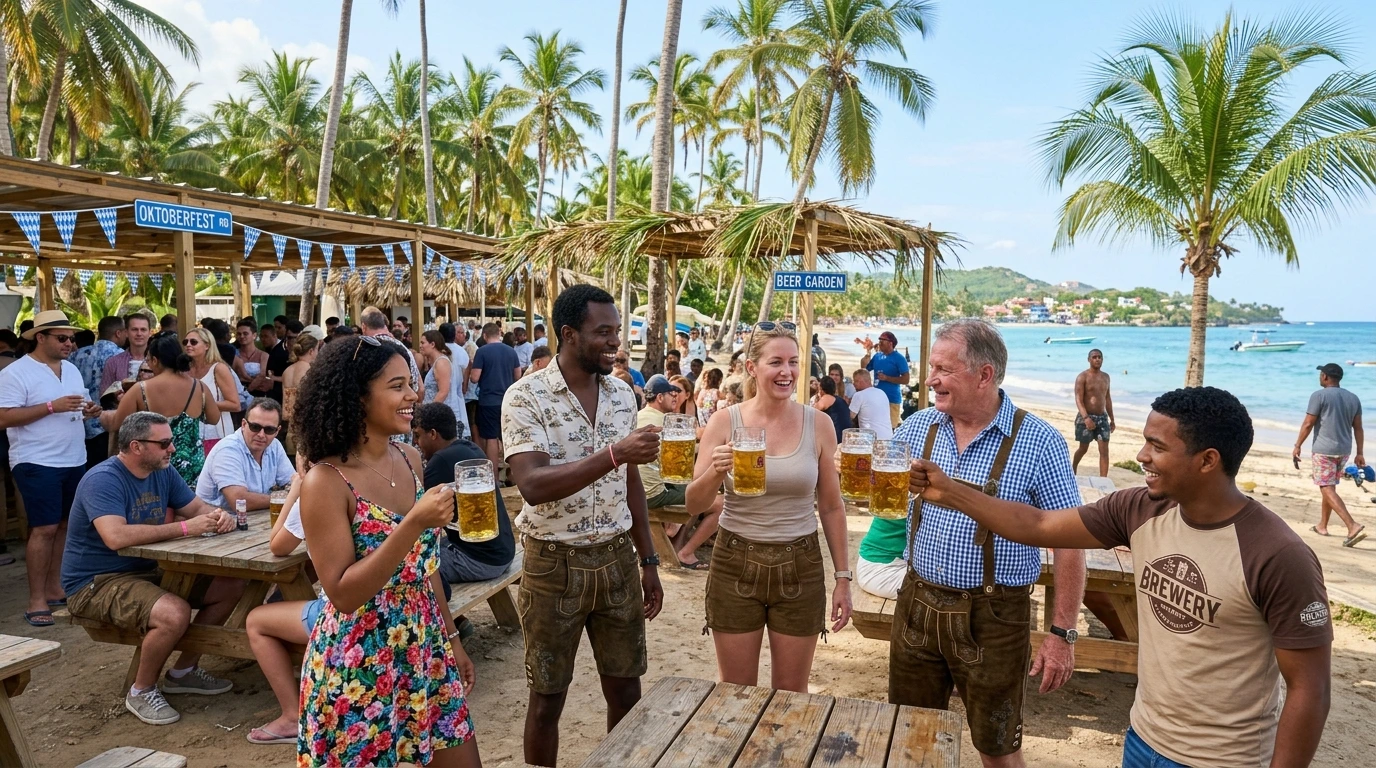
There is something deeply ironic about seeing people in Santo Domingo, Santiago, or an island resort raising one-litre beer steins beneath a tropical sun while Alpine brass music plays in the background. The scene has all the ingredients of a prefabricated product of corporate globalisation. Yet across the Caribbean, the story is more improvised, commercially astute and locally connected than beer marketing alone would suggest.
The first useful correction is historical. Oktoberfest is not a generic German holiday. It is a Bavarian invention, born in Munich and tied to the former Kingdom of Bavaria. The city of Munich dates the first celebration to October 17, 1810, after the wedding of Crown Prince Ludwig and Therese of Saxe-Hildburghausen. The original event featured a horse race, and it was repeated the following year. The festival later moved into September, traditionally to take advantage of more favourable weather—not simply to escape the European cold.
That distinction matters in the Caribbean. When people across the region gather under the label of a “German tradition”, they are usually not reproducing a single, intact cultural ritual. They are adapting a Bavarian cultural brand to a local ecosystem of craft breweries, hotels, restaurants, tourism, live music, beach culture and community fundraising.

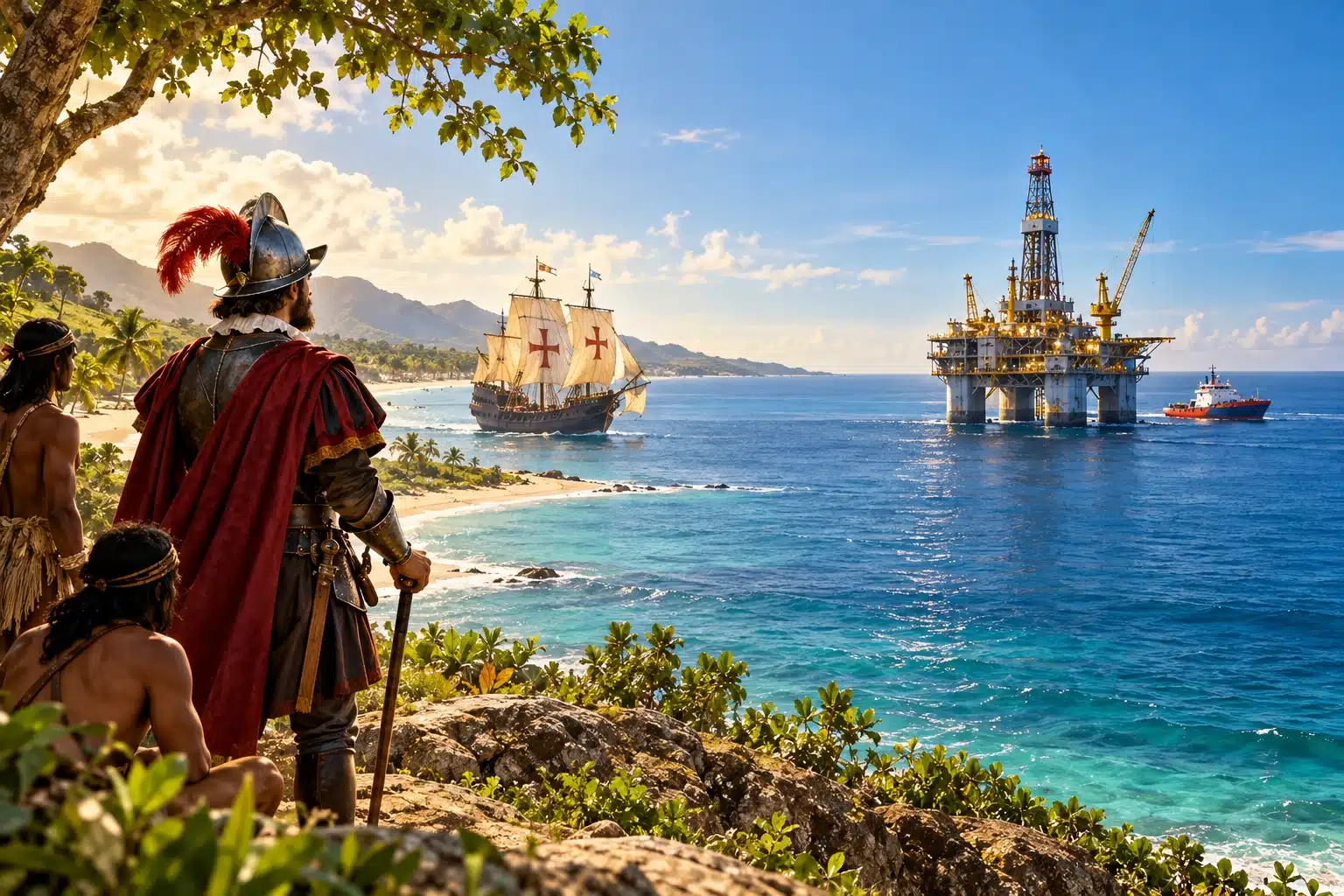
The original Dominican story begins with a cold piece of political archaeology: the Dominican Republic proclaimed its independence in 1844, while the German Empire was not unified until 1871 under Otto von Bismarck. The comparison is a reminder that “Germany” is not the same historical category as Bavaria—and that Munich has long insisted on its own regional identity.
The commercial mythology of Oktoberfest is equally revealing. A dynastic wedding in 1810 produced a public celebration that eventually became a global tourism machine. Munich’s 2025 festival drew approximately 6.5 million visitors, while the Caribbean versions operate on an entirely different scale. Their significance lies elsewhere: in the way an imported format is made useful to local businesses and communities.
In the Dominican Republic, the supermarket is one of the clearest places to see that process. In mid-September, Supermercados Nacional rolls out its “Oktoberfest Beer Festival”, bringing the Wiesn into the shopping trolley. Promotions for Munich brands such as Paulaner and Erdinger are paired with Bavarian pretzels and sausages, but also imported beef cuts, pork ribs and bank cashback offers. The message is not that Dominicans will suddenly abandon their own food culture. It is that Bavarian beer can become the excuse for a weekend barbecue.
Santiago takes that logic beyond the supermarket. According to the organisers of El Corazón Cervecero Oktoberfest, the festival will hold its 13th edition from October 16 to 18, 2026, at Parque Central, with more than 300 craft and international beer brands, food, local performers and competitions including La Jarra de Plata. Its hotel offers, transport information and parking guidance also make clear that this is not merely a drinking occasion. It is a destination event, linking beer with accommodation, mobility and visitors’ time in the city.
The same tension between imported template and local custom appears throughout the Caribbean.
In Puerto Rico, Casa Bavaria in Morovis advertises several October weekends of German food, live music, karaoke and both German and local beer served in the Oktoberfest style. Meanwhile, Ocean Lab Brewing Co. in Carolina produces a locally made Märzen Oktoberfest beer available exclusively on the island. At the Parque de las Ciencias in Bayamón, the 2026 Oktoberfest Beer & BBQ is presented through craft beer, barbecue, live music and fairground games. The format has moved well beyond the German restaurant: it now belongs to Puerto Rico’s broader food-and-entertainment economy.
Aruba offers perhaps the most visually Caribbean version. At Surfside Beach Bar in Oranjestad, the Oktoberfest format has been presented with German specialities, commercial beers, live music, DJs and games beside the sea. The result is a Bavarian festival with a beach setting and a tourism-oriented rhythm—less Munich beer hall than sunset social event.
In Nassau, The Island House scheduled its second Oktoberfest for October 17, 2026, with a German buffet, unlimited beer and soft drinks, live music and a DJ. The hotel setting and published price of BSD 150 before taxes place the celebration in the category of premium hospitality experience. Here, Oktoberfest is not primarily a cultural association’s project or a brewery’s product launch. It is an event designed to make a hotel a destination.
Bermuda adds another island-specific layer. Bermuda’s Oktoberfest 2026 is scheduled for October 2 to 4 at the Victualling Yard in the Royal Naval Dockyard. The programme includes German food, bierkeller music and beer produced at the Dockyard by Dockyard Brewing Co. Visitors can also take a ferry from Hamilton. The festival therefore combines Bavarian imagery with local brewing, historic infrastructure and the practical geography of an island connected by water.
Trinidad and Tobago demonstrates how the format can enter a hotel’s culinary calendar. During Trinidad and Tobago Restaurant Week in 2025, Hilton Trinidad offered roast pork, bratwurst, liverwurst, pretzels, sauerkraut, Black Forest cake and strudel. The menu included unlimited Stag beer and a limited-edition Märzen created by local Tommy’s Brewing Company. That collaboration says more about the contemporary Caribbean Oktoberfest than any costume alone: an international hotel, a local brewery and a familiar local lager can share the same event.
Jamaica supplies a different model. The Jamaican German Society held an Oktoberfest at Alhambra Inn in Kingston in 2025, with another edition listed for 2026. Its connection to a German-Jamaican cultural society suggests a more community-oriented celebration than a mass beer festival, although public attendance figures are not available.
In St. Thomas, the Oktoberfest becomes something more than a commercial occasion. The Family Resource Center and My Brother’s Workshop are organising a third Oktoberfest Benefit for October 3, 2026. German food, beer, music, contests and a silent auction will support programmes for families in the U.S. Virgin Islands. The 2025 edition was similarly described as a meeting point between German tradition and Caribbean spirit, with funds directed to local causes.
This is the real Caribbean paradox. Oktoberfest is marketed globally as a Bavarian tradition, but its regional life is determined by local conditions. In Santiago, it is a structured beer festival connected to hotels and tourism. In Puerto Rico, it meets craft brewing and barbecue. In Aruba, it moves onto the beach. In Nassau, it becomes a hotel experience. In Bermuda, it travels by ferry and draws on local beer. In Trinidad, it enters a restaurant week. In St. Thomas, it raises money for community services.
The Dominican case remains especially revealing. The festival can be sold through imported beer, supermarket promotions and Bavarian food, but it succeeds because it is translated into a Dominican social ritual: an excuse to gather, eat, listen to music and fill the refrigerator for the weekend. The same principle is visible across the islands.
The next time someone raises a stein in the Caribbean—or takes advantage of a supermarket promotion to stock the fridge—there is a useful distinction to remember. They are not necessarily celebrating a generic German tradition. They are participating in a cultural format that began with a Bavarian royal wedding, became a global brand and has now been refashioned island by island, according to the Caribbean’s own appetites, economies and geography.