There is something deeply fascinating about our people’s ability to turn financial hardship into a living mythology. If you examine the famous legend of the “botijas” closely—those supposed treasures buried by grandparents in the yard behind the house—you realise that it is nothing more than the Caribbean version of the search for El Dorado. It is a narrative adapted to a country that, for generations, distrusted its governments and the volatility of the local currency more than the very ground beneath its feet.
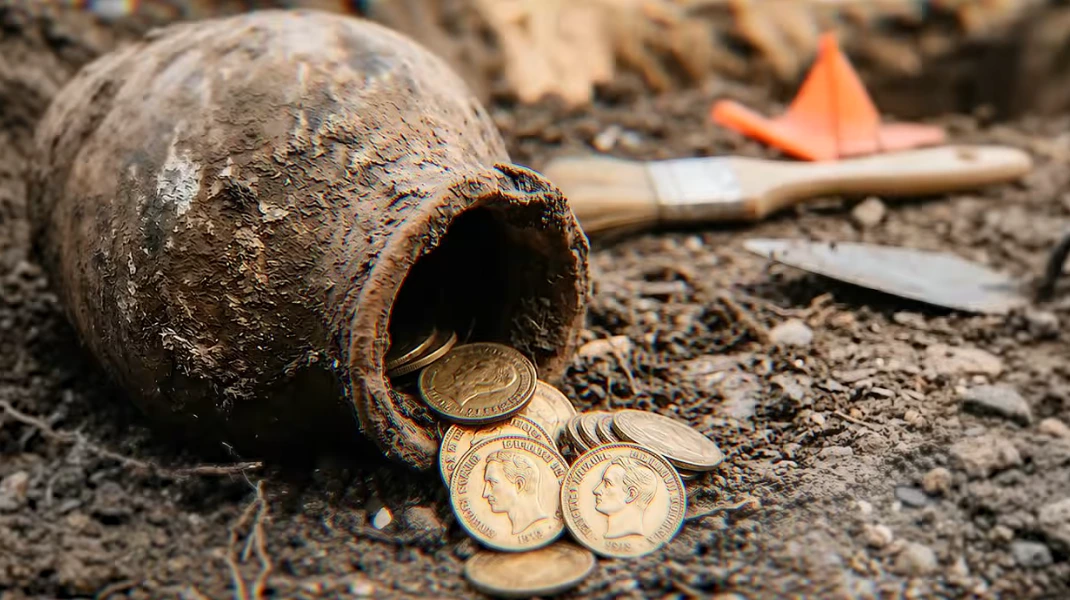
The logic behind the burial was strictly pragmatic, without a trace of romanticism. In the absence of a solid banking system in the late 19th and early 20th centuries, amid constant political instability, armed uprisings and systematic devaluations, rural people did the only sensible thing to protect their wealth: they exchanged their pennies for gold coins—the legendary US$20 Morocotas—put them in a clay jar and dug a deep hole in the shade of a tree. The real problem was not storing the capital, but the owner’s unexpected death. With the secret travelling intact to the grave, the family could suddenly find itself literally standing on a fortune while struggling to get by.
That is where Dominicans switch on their creative genius and storytelling machinery. Since the money was not passed on during the owner’s lifetime, we came up with the idea that the deceased delivers it through dreams. And to excuse the act of digging up someone’s property—which, in cold terms, is still the desecration of a grave or the theft of an inheritance—we add a coating of spiritual absolution: you are not stealing from the dead; you are “setting it free” so the soul can rest in peace. Add the white dog acting as a heavenly guardian, the obligatory prayer to the patron saint and the rule of absolute silence so the gold does not “turn into coal”, and you have the perfect packaging to justify pure, hard ambition.
Stories such as that of old Lolo in the mountains of Jarabacoa, or the story of the woman in Santiago rescued by 911 crews after spending eight months breaking up the earth in her yard, driven by a mystical revelation, show that the myth is still alive and kicking in the 21st century. At its heart, the botija satisfies a universal human desire: to get rich quickly without paying the painful price of hard work. It is the ultimate fantasy of individual economic salvation.
These days, people are armed with the latest metal detectors, searching for what the old folks left hidden. But let us agree on something with a healthy dose of local scepticism: between unexploded bombs from the April War, pieces of old wire and rusty pipes, the vast majority end up finding nothing but a tremendous backache. Even so, the legend will never die, because dreaming that Grandpa left a hidden treasure beneath the lime tree will always be far more comforting than looking at the actual balance in the savings account.
Watch the video