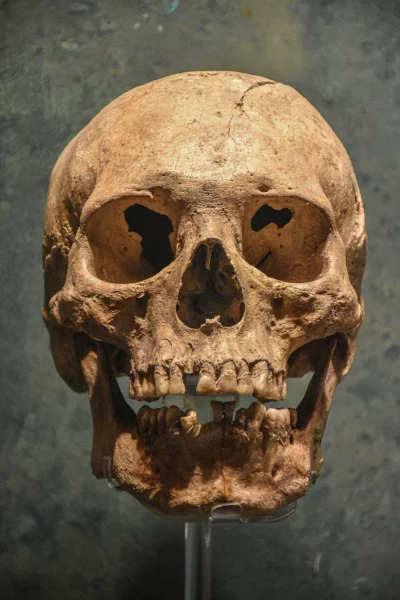
Some stories can be sustained for centuries only by modern genetics and a generous dose of nationalist stubbornness. The saga of Christopher Columbus’s remains is one of them. In October 2024, forensic geneticist José Antonio Lorente of the University of Granada dropped a bombshell: after more than two decades of cross-referencing data, DNA had irrefutably confirmed that the bones buried in Seville Cathedral belonged to the admiral.
End of the debate, some will say. But in the Caribbean, we know all too well how the politics of symbols works, and this drama is far from being a closed chapter.
The comedy of errors began early. Columbus died in Valladolid in 1506, but his remains were transferred to Santo Domingo Cathedral in 1542. They rested there peacefully until 1795, when Spain, cornered by France, decided to pack up what it believed were the bones of its star navigator and take them to Havana, and finally to Seville in 1898. The problem was that in 1877, workers excavating Santo Domingo Cathedral came across a lead box bearing a categorical inscription: “Illustrious and famous man Don Christopher Columbus.”
From then on, the standoff was set. Had the Spaniards taken the wrong body in 1795? For a century, diplomacy fed on that clash of pride: Spain displaying its Seville tomb while the Dominican Republic kept its own remains as a sacred treasure in the Columbus Lighthouse.
The Granada team tried to resolve the muddle by comparing the mitochondrial DNA of the remains in Seville with that of Columbus’s brother Diego and his son Hernando. The sequences matched. Science, however, has its limits when it runs into institutional faith. To close the circle, it was essential to analyse the skeleton kept in Santo Domingo, but Dominican authorities categorically refused to allow samples to be taken. A firm no justified by religious respect and, let’s be honest, tactical scepticism: why risk the official story and the appeal of a national monument?
Lorente himself offered a cautious opening familiar to anyone in the Caribbean: the skeletons are incomplete. After so many transfers, political upheavals and the handling of urns over five hundred years, it is perfectly plausible that the remains ended up fragmented. Some in Seville, others in Santo Domingo. A very Solomonic solution to a geopolitical mystery.
The study also added a spicy ingredient to the debate over the navigator’s origins, suggesting a Hispanic and possibly Jewish-convert lineage, which would dismantle the classic Genoese thesis. But beyond the genetic sequences and theories of origin, the finding comes at a time of profound historical reassessment. The admiral’s figure no longer inspires the unanimous enthusiasm of earlier times, and while science tries to establish the biological truth, collective memory remains divided.
Seville has the certainty of the laboratory; Santo Domingo preserves the mystery and the lead box. In the end, it seems that both sides will keep their piece of history.