By Alec Corday
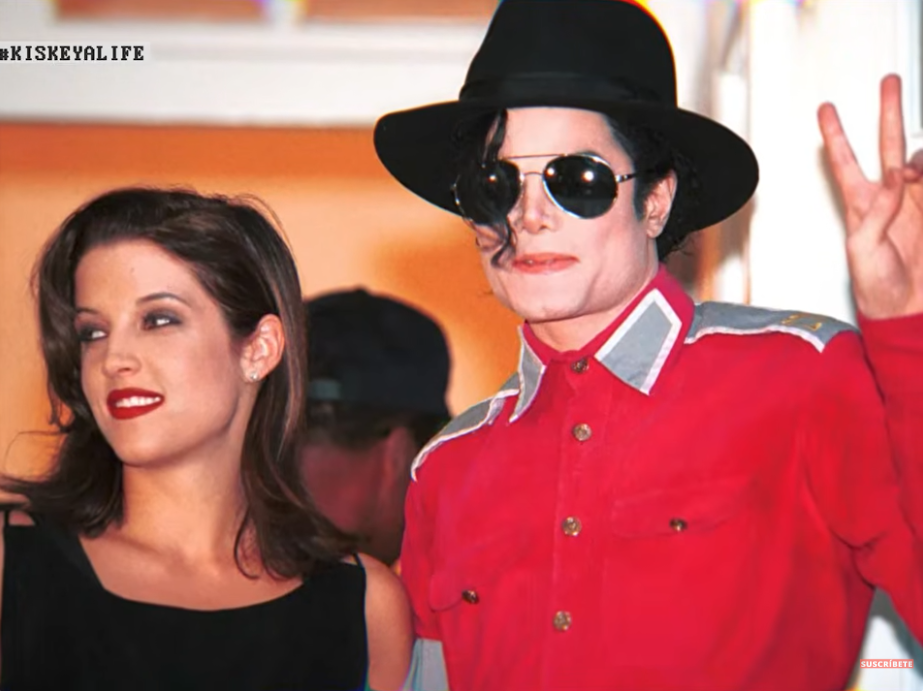
On 26 May 1994, two of the biggest surnames in music history were joined in marriage in the Dominican Republic. Michael Jackson, the King of Pop, married Lisa Marie Presley, the only daughter of Elvis Presley, the King of Rock. It was a wedding with no guests, no press and no official photographs — and according to the version everyone knows, it took place in a private house in the El Campito neighbourhood of the city of La Vega.
Thirty years later, that is the story accepted as fact in the Dominican Republic. It appears in the media, on Wikipedia and in the collective memory of a country that still feels proud to have been, for one day, the setting for one of the most talked-about unions in show business.
But there is a problem. And that problem has a name, a date and even an Associated Press report behind it.
How Michael Jackson Came to Marry in the Dominican Republic
To understand the wedding, we first need to understand why the Dominican Republic entered the story. In 1994, Lisa Marie Presley needed to divorce her first husband, musician Danny Keough, quickly and without scandal. Since 1971, the Dominican Republic had had a particular reputation in North American legal circles: it was known as the destination for quick divorces, a system originally designed to attract the divorce tourism that had previously been dominated by Mexico.
On 3 May 1994, Lisa Marie divorced Keough here, on Dominican territory. Twenty-three days later, she returned — this time to marry Michael Jackson.
The man behind both procedures was a Dominican lawyer based in Miami, who had a longstanding friendship with a judge in La Vega: Hugo Francisco Álvarez Pérez, then civil-status officer for the Second District of that province. As the judge himself has said in numerous interviews over the years, it all began with a mysterious call in early 1994, asking whether he would be willing to marry “a famous person”.
The Airplane Idea That Could Never Happen
Jackson wanted something unconventional: to get married aboard an aeroplane while flying over the island. The judge explained that this was legally impossible — Dominican law divides the territory into judicial districts, and a civil-status officer may act only within his own. An aeroplane in mid-flight belongs to no jurisdiction.
The wedding, according to the official version, therefore had to take place in La Vega. And so it was decided: the ceremony would be held at the judge’s own house in the El Campito neighbourhood.
On 25 May 1994, Jackson and Presley landed at La Romana airport in a private aeroplane and stayed at a villa in the exclusive Casa de Campo resort. That same day, the judge flew there to meet them, have them sign the sworn declaration required by Law 659 on Civil Status, and coordinate the final details.
The following morning, according to the official account, two rented white vans left Casa de Campo for La Vega. In 1994, without the motorway that exists today and without the ring road around Santo Domingo, the journey took between four and five hours — each way.

The Ceremony: Ten Minutes That Changed Entertainment History
The ceremony, conducted in Spanish as required by Dominican law, lasted only ten to fifteen minutes. The judge had dismissed his domestic staff and sent his three children to their grandmother’s house — the home was completely empty apart from the legal witnesses and the bodyguards.
When the time came for the traditional kiss at the end of the ceremony, Jackson appeared genuinely surprised and kissed her rather shyly. The judge had prepared a bottle of champagne for the toast. No one touched it. The party left hurriedly, returning to La Romana, where the private aeroplane took off at 12.20pm.
For almost two months, the secret was kept. Until an American journalist — linked both to Time magazine and the National Enquirer — obtained a copy of the marriage certificate. Knowing that the secret had been compromised, the judge chose to call Listín Diario himself rather than allow a foreign tabloid to control the narrative. The Dominican newspaper thus became the first outlet in the world to confirm the news.
But there was something curious: Jackson’s team categorically denied everything. His spokesman, Lee Solters, publicly declared that the judge’s story was “not true, categorically not true” — and refused to offer any further explanation. It was not until 1 August 1994 that Lisa Marie Presley issued an official statement confirming the marriage.
The Inconsistencies No One Wanted to Investigate Properly
This is where the story, accepted for thirty years as a straightforward fact, becomes much more complicated.
The ten-month problem. The Dominican Civil Code in force in 1994 established that a divorced woman had to wait ten months before being allowed to marry again — a law that remained in place until 2015, when the Constitutional Court finally declared it unconstitutional. Lisa Marie married Jackson barely twenty days after her divorce. Under the law in force at the time, that marriage should not have been able to take place.
The American consulate. To marry legally in the Dominican Republic, foreign nationals must submit a sworn declaration of civil status, a process that normally involves consular verification. According to reports gathered by the Associated Press, US consular officials said they had no record of Jackson or Presley ever submitting those documents.
The television investigation no one remembers. In November 1995 — while Jackson and Presley were still married — the American programme A Current Affair published the results of a year-long investigation into the Dominican wedding. Its findings were reported by the Associated Press, the world’s most widely distributed news agency.
The team found three physical and documentary inconsistencies that were difficult to ignore:
They obtained the rental contracts for both vans used on the day of the wedding. Neither had travelled more than 159 kilometres in total — while the round trip from La Romana to La Vega, using the roads of the time, was around 450 kilometres.
They obtained customs documents confirming that the private aeroplane took off from La Romana at exactly 12.20pm — a time that, according to the official chronology, made it practically impossible for the group to have returned from La Vega in time.
And they compared, frame by frame, the home video of the ceremony with the rooms at the Casa de Campo resort. According to the report, the windows, mouldings and furnishings matched — suggesting that the ceremony took place in a room at the resort itself, rather than at the judge’s house in La Vega.
When the team confronted Judge Álvarez Pérez with these findings, the situation became tense. According to the report carried by AP, an associate of the judge locked the filming team in an office and demanded that they hand over the tape.
The report was published. But no one officially responded. There was no denial. There was no legal action. And a few weeks later, Jackson and Presley announced their divorce — news that completely buried any interest in the legal questions surrounding their marriage.
Why Does This Matter Thirty Years Later?
The truth is that, legally, it no longer matters. Jackson died in 2009. Lisa Marie Presley died in 2023. They divorced in 1996. The marriage certificate — number 188, book 154, folio 88 of the La Vega civil registry — was auctioned in 2023 by New York auction house Weiss Auctions for $67,235, confirming that, somewhere in the Dominican Republic, that document was signed and made real.
What does matter is the question itself. Because it reveals something fascinating about how legends are constructed: a simple, orderly and convenient version can survive for thirty years without anyone seriously questioning it — even when documentary evidence gathered by one of the world’s most trusted news agencies suggests that reality may have been much more complicated.
Did the ceremony take place in La Vega, as the judge who officiated it insists? Or in a room at Casa de Campo, as the A Current Affair investigation suggests? After three decades, without the original house, without official photographs and with the only Dominican witness having withdrawn from public life years ago, it is possible that we will never know for certain.
What is an undeniable fact is this: somewhere in this country, the King of Pop said “I do” to the daughter of the King of Rock. Under the signature of a Dominican judge. With a certificate registered on national territory, specifically in La Vega.
That part of the story, no one can deny.