
From the Jungle to Pain: The Hidden Journey of the Coca Leaf

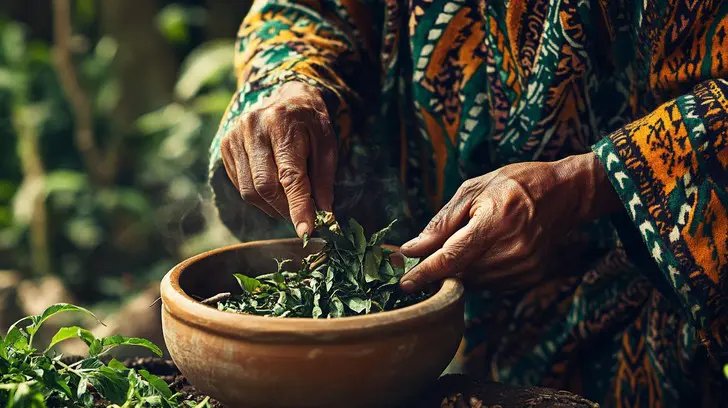
In the Andean highlands, holding a cup of this steaming infusion is simply a harmless remedy for altitude sickness, a tradition used for centuries. But there is an uncomfortable truth hovering over this small cup: from these same delicate green leaves comes one of the most powerful, coveted and dangerous drugs on the planet.
How did an ancestral medicine end up becoming a white powder capable of unleashing wars, generating unimaginable fortunes and sowing death? Questions came pouring in. I wanted to understand it all. How is it really made? How did it become what it is today? And why has the world been unable to stop this bloody business? To find answers, I decided to pack my bags and investigate on the ground, travelling from Bolivia to Colombia. Because this is not just the story of a substance; it is the chronicle of how a simple plant was transformed into a geopolitical weapon and a multibillion-dollar market that still shapes our present.
A Human Battery at 4,000 Metres Above Sea Level
At high altitude, the human body undergoes a drastic change. At around 3,000 or 4,000 metres above sea level, oxygen is scarce and every breath feels heavy. I experienced it firsthand alongside my wife, Laura, as we explored the imposing Salar de Uyuni and the mystical train cemetery in the Bolivian highlands. Laura dreamed of photographing the starry sky reflected on the white floor of the salt desert, but the extreme cold and lack of air hit us hard.
It was at that critical moment that our Quechua guide, Romualdo, smiled and pulled out his secret weapon: a handful of coca leaves. In his local language, they call it "picho." Romualdo explained that local workers keep them in their mouths without swallowing them, chewing slowly to obtain "strength to work." He told us it works exactly like a permanent battery for the body. After adding a touch of "coca dos más" and trying the mate right there, I immediately understood why this leaf was the absolute key to surviving on these hostile peaks. The relief was instant.
8,000 Years of a Sacred Plant
What we discovered is that Andean peoples uncovered this secret thousands of years ago. Faced with altitude, freezing cold and extreme exhaustion, they found an indispensable ally in this small-leafed shrub. By chewing coca, hunger disappeared and energy was restored.
Scientific and archaeological history supports this in fascinating ways. At the Gold Museum in Bogotá, pre-Hispanic gold tools are displayed that the Muisca used exclusively for consuming coca, enhancing its effects by mixing it with shell lime or tobacco. Archaeologists have found intact leaves alongside 8,000-year-old mummies and ceramic vessels with figures featuring swollen cheeks, immortalising the act of chewing the leaf. For them, coca was a sacred plant, a gift from the gods present in medicine, rituals and working days. In its natural state, the leaf is innocent. Coca tea is milder than a cup of coffee, and today it remains perfectly legal and culturally accepted in formats ranging from sweets to craft beers.
The Chemical Metamorphosis: The Molecule Is Born
So where does the story take a wrong turn? It all begins in the dense jungles of Colombia, Peru or Bolivia. Each wild coca leaf contains a microscopic dose of an alkaloid. In tea or when chewed, that amount is so small that it merely helps with breathing and provides energy. But modern drug trafficking discovered that if you gather hundreds of thousands of these leaves and isolate that molecule, the result is destructive.
The current process is a disturbing journey through makeshift laboratories hidden beneath wooden huts, with plastic barrels in the jungle. First, the "raspachines" collect the leaves for a few dollars a day. Then the black magic of illegal chemistry takes over: the leaves are finely chopped, mixed with caustic soda or boiled bicarbonate, and workers tread on them wearing rubber boots.
Here comes the most alarming step: to extract the alkaloid from the plant, they pour large quantities of petrol over the mixture. If petrol is scarce, they turn to "paturrugillo," a highly toxic homemade fuel made from stolen petroleum that devastates jungle soils. After hours of resting and filtering through old rags, the chemical liquid becomes a thick paste called "chicle," from which the destructive basuco emerges. Finally, after adding hydrochloric acid and more chemicals, the base paste is obtained, popularly known as "the cheese" or "la merca." At that remote point in the jungle, a single kilogram is already worth around $600. The farmer hands the shipment over to pack animals or engines travelling along hidden trails, ending his task and beginning the international trafficking operation.
The Empire, Gold and Control of Pain
When the Spanish conquistadors arrived in the Andes searching for gold and silver, they encountered the same invisible barrier of altitude. Seeing Indigenous people chewing green leaves to withstand brutal workdays, the Church and the Crown initially banned the practice, labelling it witchcraft and idolatry. The result was an economic collapse: without the leaf, Indigenous people died of exhaustion and could not endure enslaved labour in the mines of Potosí.
The Spanish quickly understood the business. They lifted the ban, legalised coca and began charging high taxes on its distribution, using it as human fuel to extract the silver that financed the Spanish Empire for centuries. By 1569, Spanish doctors were already grinding it into powder to treat and soothe superficial wounds. They marvelled at its ability to block physical suffering. Because in the end, if we examine history under a magnifying glass, this plant’s evolution has always revolved around one of the most human and desperate needs: how to deal with pain.
Chapter 6: The Caribbean Launchpad — How the Merchandise Reaches Quisqueya
The real radical change for our island occurred when the legal market collapsed globally. International prohibitions in the early 20th century, such as the Harrison Act of 1914 in the United States, did not extinguish the desire to consume; they simply pushed everything underground and gave life to the black market [vk6Rb9b3AYw]. At heart, cartels operate exactly like multinational logistics corporations, with the only difference being that their activity is entirely illegal [vk6Rb9b3AYw]. [1]
These organisations love to outsource risks [vk6Rb9b3AYw]. They prefer farmers in South America, jungle chemists and local transporters to shoulder the lethal and dangerous part: illness, prison or death [vk6Rb9b3AYw]. They buy the finished product, which is why when authorities destroy a laboratory or sink a speedboat, the network’s bosses barely react [vk6Rb9b3AYw]. The infrastructure continues operating intact [vk6Rb9b3AYw]. [1]
And how does the Dominican Republic fit into this multimillion-dollar puzzle? For one simple and compelling geographic reason: our strategic location at the centre of the Caribbean.
[Origin: Colombia / Venezuela]
         │
         ▼  ~1,600 km (Direct Maritime Route)
[Transit: Caribbean Sea / Speedboats and Containers]
         │
         ▼
[Destination: DR coast (Barahona, Caucedo) and onward to Europe / US]
Just about 1,600 kilometres in a straight line from the coasts of Colombia and Venezuela, Quisqueya became the ideal transshipment point [hoy.com.do]. The molecule’s modern journey to our island is mainly divided into two audacious methods:
- The highways of the sea: Fleets of speedboats ("go-fast boats") and fishing vessels loaded with tonnes of kilogram packages depart from northern South America [insightcrime.org, hoy.com.do]. They take advantage of the vastness of the ocean to strike the deserted beaches of the Dominican southern coast before dawn, especially in provinces such as Barahona and San Pedro de Macorís [hoy.com.do]. [1]
- The container war: Cartels contaminate legitimate commercial flows. They hide shipments inside mass-export products such as bananas or pineapples [np6jivCnw0Y, qysVM5hcBEo]. The Caucedo Multimodal Port has become the main epicentre of this method, where authorities intercept massive camouflaged shipments seeking to travel onward to ports in Europe and the United States [insightcrime.org, qysVM5hcBEo, dw.com].
The Trujillo Myth: Was It Used During "The Era"?
There is an unavoidable historical question: What happened with drugs during the 31-year dictatorship of Rafael Leónidas Trujillo [en.wikipedia.org]?
During the so-called "Trujillo Era" (1930–1961), control of Dominican territory was absolute, police-driven and omnipresent [en.wikipedia.org]. The dictator ran the country like a private estate [en.wikipedia.org, britannica.com]. In those mid-20th-century years, cocaine was not yet the enormous, structured transnational industry we know today; the major Colombian cartels did not even exist.
However, the regime laid the institutional foundations for what would come later. Trujillo established a culture of corruption and militarised control at customs and borders, operating exclusively for his benefit or that of his associates. Although domestic consumption was practically nonexistent and brutally punished without the regime’s approval, figures from Trujillo-era high society and diplomats in the dictator’s inner circle—known for their extravagant lives abroad—were already interacting with international smuggling markets. When the dictatorship fell in 1961, that monopoly of fear was dismantled, but it left behind porous and vulnerable institutional infrastructure that emerging South American drug cartels later knew how to exploit, turning the island into their favourite launchpad to the world.